Thinning Hair? Here Is How PRP Hair Restoration Works in Franklin Square NY
Nobody books a hair restoration consultation the first time they notice something. They notice it, decide it is the lighting, and then check again in a different bathroom.
It usually goes like this. More hair in the shower drain than there used to be. A part that reads wider in photos than it feels in the mirror. A ponytail that has quietly gone from thick to fine over a couple of years. By the time someone sits down with us, they have usually been watching it for a while and hoping it would sort itself out.
It rarely does on its own. But it is more workable than most people assume, especially when you get to it early.

What we are actually doing
Our hair restoration approach combines two things: microneedling and either PRP or exosomes.
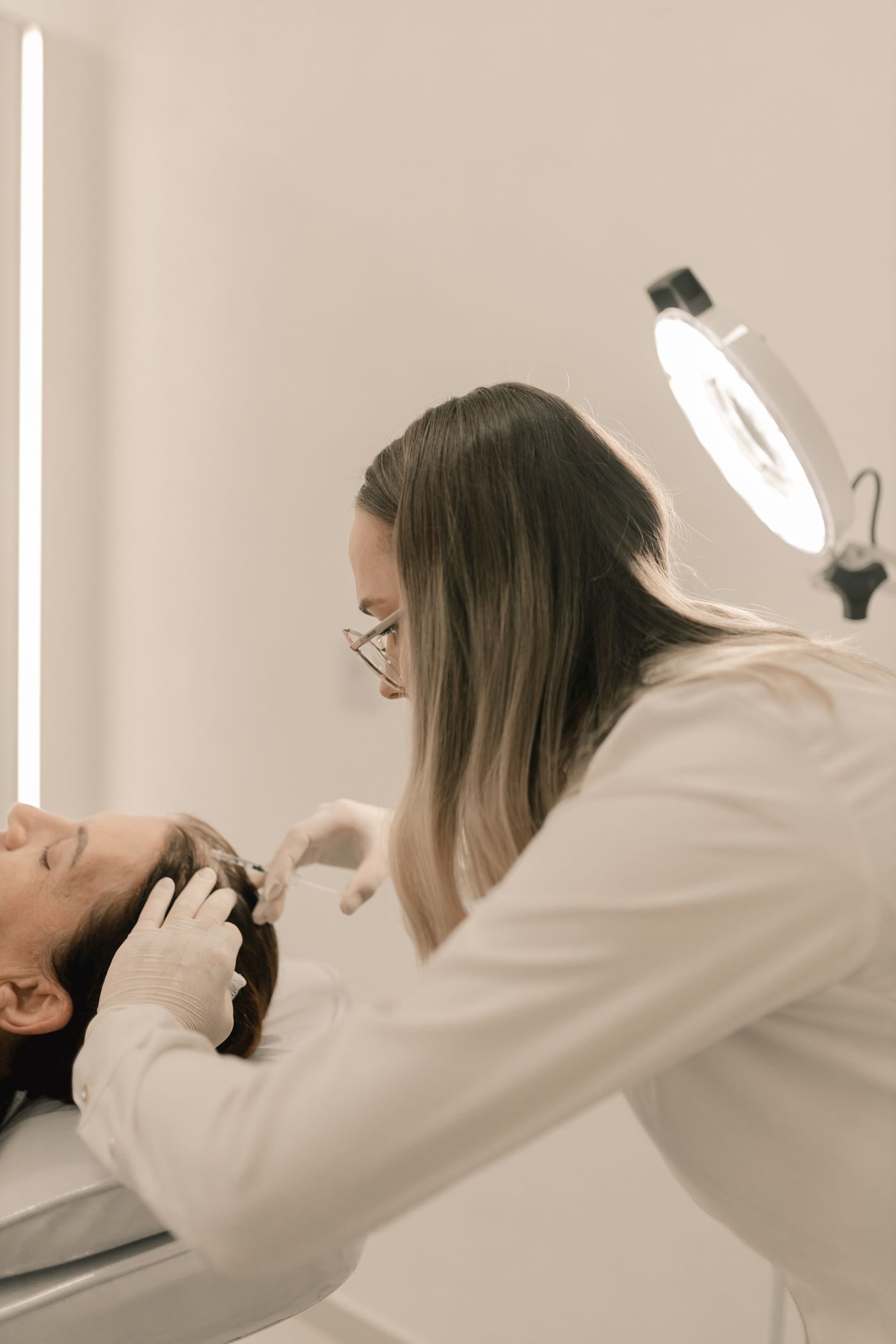
Microneedling creates hundreds of tiny controlled channels in the scalp. Two things happen. Your body responds to those micro-channels by ramping up its natural repair activity in the area, and those same channels let what we apply next get where it needs to go instead of sitting on the surface of your scalp doing nothing.
PRP stands for platelet rich plasma. We draw a small amount of your own blood, spin it in a centrifuge to separate out the platelet rich portion, and apply that concentrated plasma to the scalp. Platelets carry growth factors, which are the signaling proteins your body already uses for repair. We are not introducing anything foreign. We are concentrating something you make and putting it where you need it.
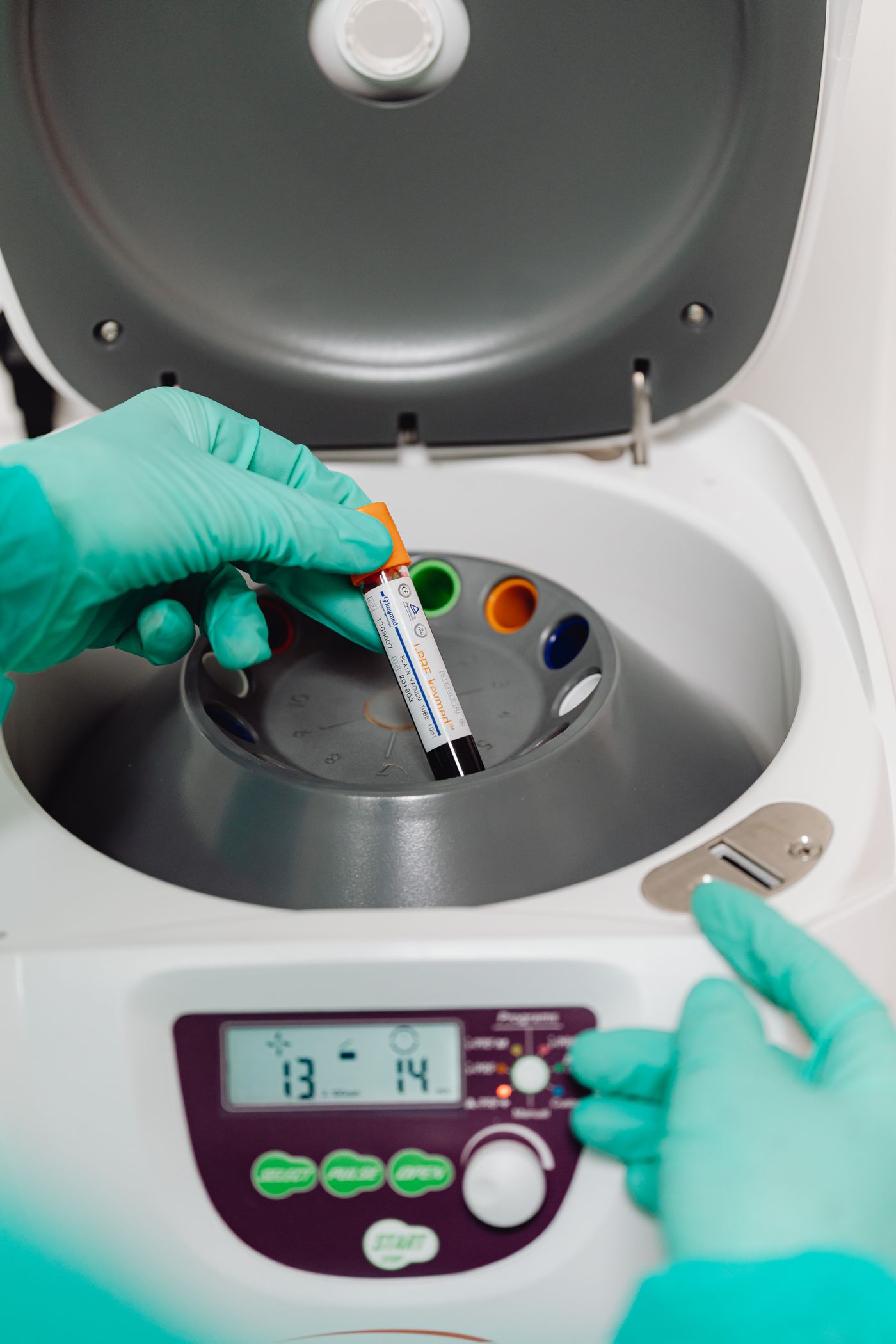
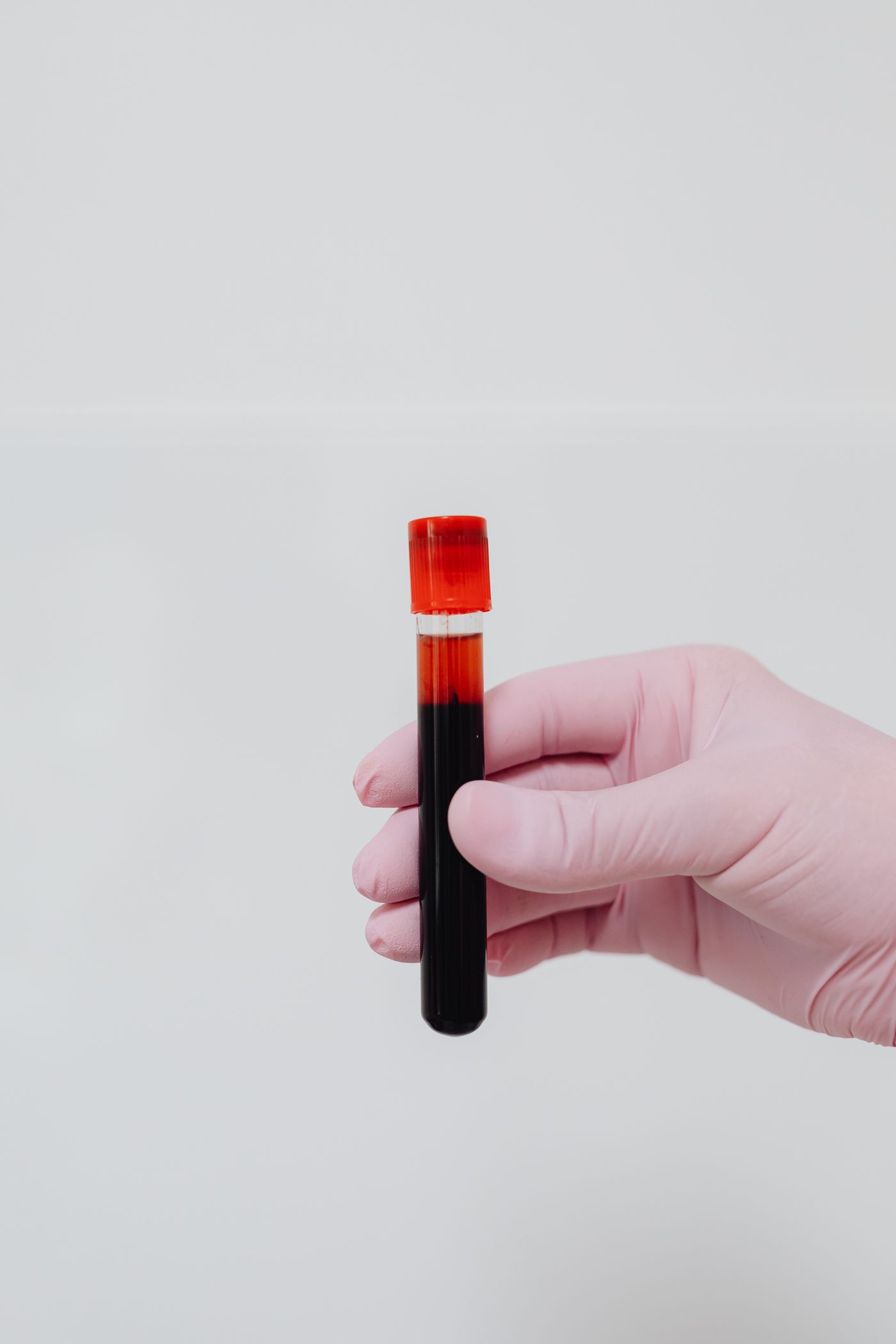
One small vial, spun down in the office, separated into the platelet rich layer we use on your scalp.
Exosomes are the alternative for people who would rather skip the blood draw or who want a different approach. They are messenger particles that carry signals between cells, and they are applied the same way after microneedling.
Which one is right for you comes out of your consultation. Neither is a magic answer, and we will not pretend otherwise.
The take-home piece nobody talks about
In-office sessions are half of it. The other half happens in your bathroom every day.
We provide a topical growth serum blended with minoxidil, ketoconazole, azelaic acid and biotin. Each of those does a different job in the scalp environment, and the serum is meant to be used consistently between visits.
This is where most people lose the plot. They come in for four appointments, skip the serum three days a week because they got busy, and then wonder why the results were underwhelming. The at-home routine is not optional homework. It is part of the treatment.
How many sessions, and how long until you see something
We generally recommend four to six sessions.
Most people start noticing a difference around the three month mark with consistent use of the serum. That number frustrates people and we understand why, but hair does not work on a fast clock. Hair follicles cycle through growth, rest, and shedding phases, and you are essentially waiting for a full cycle to turn over before you can see what changed.
What people tend to notice first is not new length. It is that the shedding slows down. Less hair on the pillow, less in the brush. Then, later, fine new growth along the hairline and through the part.
We take photos at your first visit specifically because your memory of your own hair is unreliable. Three months in, standing in your own bathroom, you will swear nothing changed. Then we put the photos side by side.
Results vary from person to person, and how much you get back depends heavily on how long the thinning has been going on and what is driving it. Somebody who comes in six months after noticing it has more to work with than somebody who comes in six years later.
Who this works best for
Honestly? People who caught it early.
If your follicles are miniaturizing but still active, there is something to support. Thinning at the part, a hairline that has crept back, general density loss across the crown, postpartum shedding that never fully recovered, and stress-related thinning all tend to be reasonable candidates.
If an area has been completely smooth for many years, the follicles there may no longer be viable, and no amount of PRP is going to bring back what is not there. We will tell you that at your consultation instead of selling you a package.
Hair loss also has a lot of possible drivers. Genetics, hormones, thyroid, iron levels, medications, major stress, crash dieting. If your history suggests something medical is contributing, we would rather you get that worked up alongside treatment than treat the scalp in isolation. Sergina spent years in primary medicine and cardiology before moving into aesthetics, so this is the kind of conversation she is comfortable having with you.
What the appointment is like
Plan for about an hour.
If you are doing PRP, we start with the blood draw, and it is one small vial. While that spins, we numb your scalp with a topical so you are comfortable. Then comes the microneedling pass across the treatment areas, followed by the PRP or exosomes applied directly to the scalp.
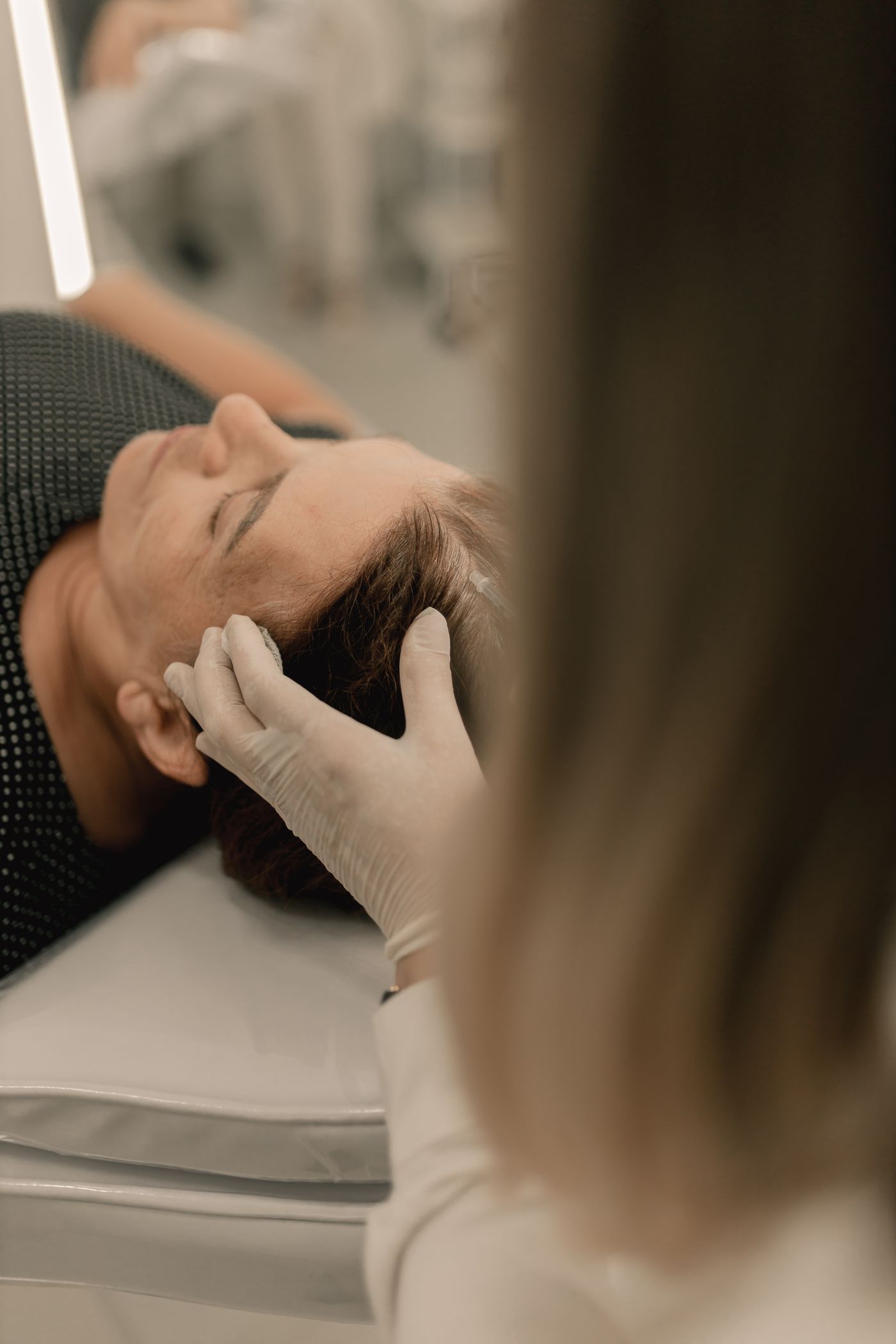
You skip washing your hair for the rest of the day, skip the gym for 24 hours, and skip harsh styling products for a couple of days.
You can go back to work. Nobody is going to look at you and know.
Frequently asked questions
The microneedling is the part people ask about, and we numb the scalp beforehand with a topical. Most people describe it as pressure and vibration rather than sharp pain. The blood draw is the same as any routine lab draw.
Over the counter topicals work on the surface and rely entirely on daily consistency for years. What we do combines an in-office procedure that stimulates the scalp directly with a customized topical you use at home. It is a layered approach rather than a single product.
Yes. We just ask you to space your color appointment and your treatment appointment by about a week in either direction so we are not stacking irritation on a scalp that is already working.
Not at the same intensity. Most people do the initial series of four to six sessions and then move to maintenance visits spread further apart, along with staying consistent on the at-home serum. Hair thinning is usually an ongoing process, so holding your ground is part of the goal.
Not at all. A large share of the people we treat for hair restoration are women, and female thinning tends to show up differently, usually as a widening part and overall density loss rather than a receding hairline. It gets talked about less, which is exactly why so many women wait too long to ask about it.